Overview
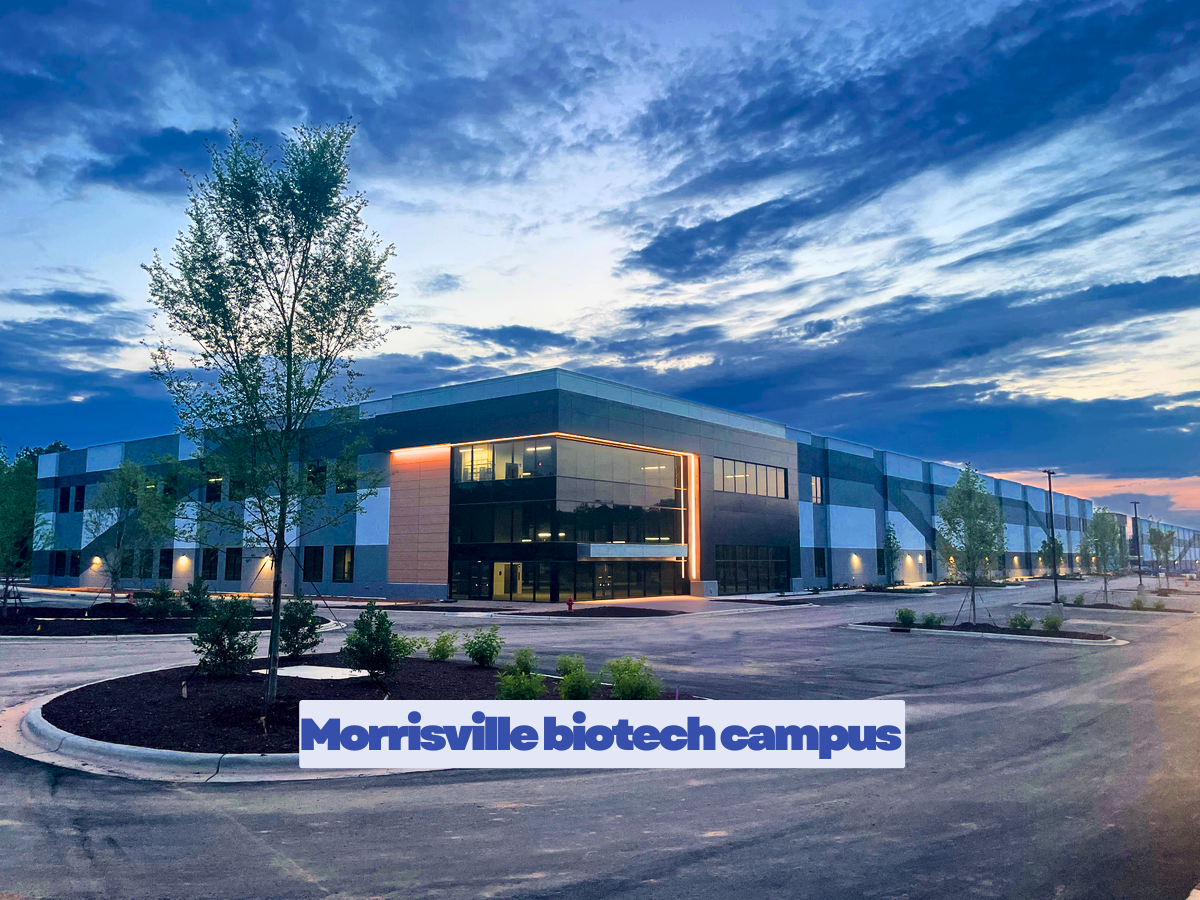
The Morrisville Biotech Campus is a major emerging life sciences development located in Morrisville, North Carolina, United States. It is designed as a large-scale innovation ecosystem rather than a single facility, bringing together biotechnology companies, pharmaceutical organizations, research institutions, and advanced manufacturing units within one integrated environment. The purpose of this campus is to support scientific discovery, accelerate medical innovation, and strengthen collaboration across the entire life sciences value chain.
In today’s biotechnology industry, the traditional model of isolated laboratories is rapidly being replaced by campus-style innovation hubs. These modern developments are built to encourage close interaction between researchers, engineers, and production specialists. By keeping all key stakeholders in one environment, companies can significantly reduce the time required to move from research to development and finally to commercial production. The Morrisville Biotech Campus is a clear example of this global shift toward integrated scientific ecosystems.
This development is closely linked to the broader Spark LS life sciences initiative and forms part of the rapidly growing Research Triangle region, which is already one of the strongest biotechnology hubs in the United States. Its strategic positioning within this ecosystem gives it a strong advantage in terms of talent, infrastructure, and industry collaboration.
Location and Strategic Importance
The Morrisville Biotech Campus is located in Morrisville, a town in North Carolina situated between Raleigh, Durham, and Chapel Hill. This area is widely known as the Research Triangle, a globally recognized center for biotechnology, pharmaceuticals, and academic research. The region has built its reputation over decades through strong collaboration between universities, private industry, and government-backed research programs.
One of the most important strengths of this location is its proximity to three major universities: Duke University, the University of North Carolina at Chapel Hill, and North Carolina State University. These institutions are internationally recognized for their contributions to science, medicine, engineering, and technology. They consistently produce highly skilled graduates who enter the biotech workforce, ensuring a continuous supply of talent for companies operating in the region.
In addition to academic excellence, the Research Triangle already hosts numerous multinational pharmaceutical and biotechnology companies. This creates a highly developed industrial environment where research, innovation, and commercialization are closely connected. The presence of Raleigh-Durham International Airport further strengthens the region’s global connectivity, making it easier for international investors, researchers, and executives to access the campus.
Because of these combined factors, Morrisville has become one of the most strategically important locations for life sciences development in the United States.
Development and Investment Background
The Morrisville Biotech Campus is backed by significant private investment from leading real estate and life sciences development firms. It is widely described as a multi-billion-dollar project that reflects the increasing global demand for advanced laboratory infrastructure and biomanufacturing capacity.
The biotechnology industry has undergone rapid transformation over the past decade, especially with increasing focus on personalized medicine, gene therapy, and vaccine development. These advancements require highly specialized facilities that can support both early-stage research and large-scale production. As a result, demand for integrated biotech campuses has grown significantly, leading to the development of projects like Morrisville.
The campus is being developed in phases rather than as a single construction effort. This phased approach allows developers to respond to market demand while minimizing financial risks. As new companies enter the region or existing firms expand their operations, additional facilities can be added gradually. This flexible development model ensures long-term sustainability and adaptability.
The project also aligns with a broader national trend in the United States, where life sciences real estate is expanding rapidly. Cities and regions with strong academic and research foundations are increasingly becoming centers for biotech investment and infrastructure development.
Design and Infrastructure
The design of the Morrisville Biotech Campus follows modern principles of life sciences campus planning, where research, production, and lifestyle elements are integrated into a single cohesive environment. The goal is not only to provide scientific infrastructure but also to create a functional and engaging workspace that supports collaboration and innovation.
The campus is expected to include advanced laboratory facilities designed for biotechnology and pharmaceutical research. These labs will support a wide range of scientific activities, including molecular biology, genetic engineering, drug development, and clinical research. Alongside these facilities, biomanufacturing units will enable companies to scale production from experimental stages to commercial distribution.
Office spaces are also an important component of the campus. These areas will support corporate operations, administrative functions, and startup companies that require flexible environments to grow. In addition, innovation hubs will be included to encourage collaboration between different organizations, allowing researchers and industry professionals to exchange ideas and solve complex scientific challenges.
Beyond research infrastructure, the campus is designed to include lifestyle amenities such as retail spaces, dining options, and recreational zones. These facilities are intended to improve the daily experience of employees and create a more balanced working environment. Green spaces, walking paths, and landscaped areas are also part of the design, contributing to environmental sustainability and employee well-being.
Biotech Ecosystem and Scientific Focus
The Morrisville Biotech Campus is centered around the life sciences industry, which includes biotechnology, pharmaceuticals, diagnostics, and medical technology. Its main objective is to create a complete ecosystem where every stage of scientific development can occur within a connected environment.
Within this ecosystem, companies typically focus on areas such as drug discovery, vaccine development, gene therapy, cell therapy, and advanced diagnostics. These fields require close collaboration between scientists, engineers, and production teams. By bringing all these disciplines together, the campus helps reduce inefficiencies and accelerates the innovation process.
This integrated model is particularly important in modern healthcare, where speed and accuracy are critical. When research teams can directly collaborate with manufacturing experts, scientific breakthroughs can move more quickly from the laboratory to real-world application. This ultimately leads to faster development of life-saving treatments and improved global healthcare outcomes.
Economic Impact
The Morrisville Biotech Campus is expected to have a major long-term impact on the regional economy. Large-scale life sciences developments typically generate significant economic activity through construction, operations, and supporting industries.
During the construction phase, the project creates jobs in engineering, architecture, construction, logistics, and supply chain management. Once operational, the campus generates long-term employment in scientific research, manufacturing, administration, and facility management. This combination of short-term and long-term job creation helps stabilize the local economy.
The presence of global biotech companies also attracts additional investment into the region. Supporting industries such as transportation, hospitality, equipment supply, and maintenance services benefit from increased demand. Local governments also experience higher tax revenues, which can be reinvested into public infrastructure and services.
Over time, developments like this strengthen the overall identity of the Research Triangle as one of the world’s leading biotechnology regions.

Workforce and Employment Growth
Job creation is one of the most significant outcomes of the Morrisville Biotech Campus. The development is expected to support thousands of jobs across a wide range of skill levels. These include highly specialized scientific roles such as biomedical researchers, pharmacologists, molecular biologists, and chemical engineers.
In addition to scientific positions, there will be a strong demand for technical staff such as laboratory technicians, manufacturing specialists, and quality control professionals. Administrative, operational, and support roles will also play a crucial role in maintaining campus operations.
The presence of nearby universities ensures a steady pipeline of qualified graduates entering the workforce. This connection between education and industry helps maintain long-term workforce stability and supports continuous growth in the biotechnology sector.
Connection to Research Triangle Park
The Morrisville Biotech Campus is closely connected to Research Triangle Park, one of the most established research and development hubs in the United States. This connection provides access to a broad network of companies, research institutions, and government agencies.
Being part of this ecosystem allows companies within the campus to collaborate more easily with external partners. It also enhances access to shared resources, research expertise, and industry knowledge. This level of connectivity significantly increases innovation potential and strengthens the overall competitiveness of the region.
Sustainability and Urban Planning
Sustainability is a key consideration in the development of the Morrisville Biotech Campus. Modern life sciences campuses are expected to follow environmentally responsible design principles, and this project is no exception.
Energy-efficient building systems, sustainable construction materials, and water conservation technologies are expected to be part of the infrastructure. The inclusion of green spaces and pedestrian-friendly design also contributes to environmental quality and reduces reliance on vehicles.
These sustainability measures not only reduce environmental impact but also create healthier and more attractive working conditions for employees. This reflects a broader global shift toward environmentally conscious industrial development.
Challenges and Considerations
Despite its strong potential, the Morrisville Biotech Campus faces several challenges. One of the primary concerns is the high cost of developing and maintaining advanced biotechnology infrastructure. These facilities require specialized equipment, strict safety standards, and continuous investment.
Another challenge is competition from other global biotech hubs such as Boston, San Francisco, and leading international centers in Europe and Asia. These regions already have established ecosystems and attract significant talent and investment.
Regulatory requirements in the pharmaceutical and biotechnology industries also add complexity, as companies must meet strict compliance standards. However, the strong foundation of the Research Triangle helps mitigate many of these challenges.
Future Outlook
The future of the Morrisville Biotech Campus is closely tied to the continued expansion of the global biotechnology industry. As demand for advanced healthcare solutions, personalized medicine, and innovative drug development continues to grow, integrated campuses like this will become increasingly important.
Over time, the campus may expand to include additional research facilities, startup incubators, international partnerships, and advanced manufacturing clusters. With continued investment and development, Morrisville has the potential to become one of the most influential biotech hubs in the United States.
Final Thoughts
The Morrisville Biotech Campus represents a major milestone in the evolution of life sciences infrastructure in North Carolina. By combining research, manufacturing, and collaboration within a unified ecosystem, it supports faster innovation and stronger industry growth. Its location within the Research Triangle provides a powerful foundation for long-term success, while its modern design reflects the future direction of the global biotechnology industry.
While challenges exist, the overall outlook remains highly positive. The campus is positioned to contribute significantly to healthcare innovation, economic development, and scientific advancement in the United States for decades to come.
FAQs
Q: What is the Morrisville Biotech Campus?
A: It is a large life sciences development in North Carolina designed for biotech research, pharma companies, and advanced manufacturing.
Q: Where is the Morrisville Biotech Campus located?
A: It is located in Morrisville, North Carolina, USA, near the Research Triangle Park region.
Q: What is the main purpose of this campus?
A: Its main purpose is to support biotech innovation, drug development, and collaboration between science companies.
Q: Why is this campus important?
A: It boosts job creation, economic growth, and strengthens the biotechnology industry in the region.
Q: Is it a single building or a full campus?
A: It is a full integrated campus with labs, offices, and manufacturing facilities, not just one building.