Introduction
The diesel pickup market has gone through many technical updates in the last decade, but few have received as much attention as the Cummins tech recall. Unlike safety recalls that deal with brakes or airbags, this one is connected to emissions software and how diesel engines behave in real-world driving conditions.
For owners of Ram heavy-duty trucks, especially those equipped with the 6.7L Cummins diesel engine, this update became a major talking point. It is not only about compliance with environmental rules but also about how modern diesel engines are calibrated to meet strict emission limits without affecting performance too much.
The Cummins tech recall has also gained attention because of incentives offered to owners, along with debates in diesel communities about whether software updates change the driving experience.
What is Cummins Tech Recall
The Cummins tech recall refers to an emissions-related software update applied to certain Cummins diesel engines used in Ram trucks. It is officially known as Emissions Recall 67A, introduced after regulatory actions related to emissions compliance.
At its core, this recall is a reprogramming of the engine control module (ECM). Instead of replacing physical components, the update modifies how the engine manages emissions systems such as fuel injection timing and exhaust aftertreatment.
The goal is simple: ensure the engine meets emissions standards consistently during real-world driving, not just under laboratory testing conditions. Because of its software-based nature, many owners refer to it as a calibration update rather than a traditional mechanical recall.
Why the Recall Was Introduced
The background of the Cummins tech recall comes from regulatory investigations by environmental authorities in the United States. These investigations focused on differences between emissions performance during testing and actual road driving.
Certain engine calibrations were found to produce higher levels of nitrogen oxide (NOx) emissions during normal driving conditions than what was recorded in controlled tests. While the engines were not considered unsafe, they did not fully meet regulatory expectations.
As part of a settlement agreement, Cummins committed to releasing software updates across affected vehicles. This led to the rollout of the Cummins tech recall, aimed at bringing emissions performance in line with legal standards without requiring major hardware changes.
Vehicles and Engines Affected
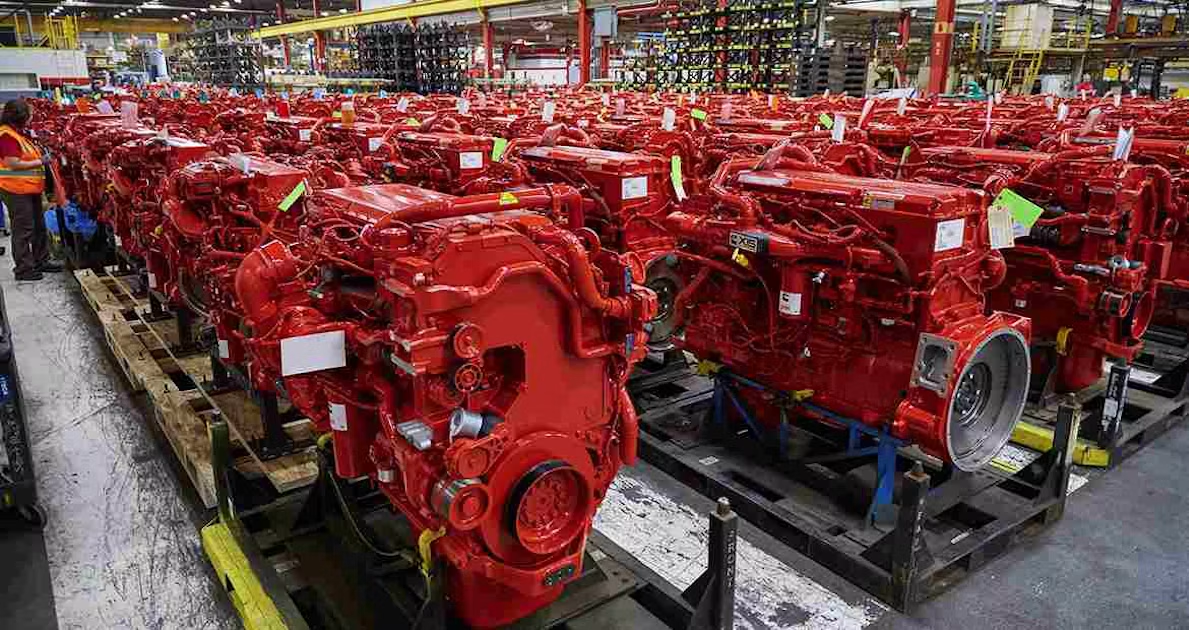
The Cummins tech recall mainly applies to Ram heavy-duty trucks equipped with the 6.7-liter Cummins turbo diesel engine. The most commonly affected models include Ram 2500 and Ram 3500 trucks, along with some commercial variants.
Most vehicles impacted fall within model years 2013 to 2018, although exact eligibility depends on the vehicle identification number (VIN). Not every truck from these years is affected, which is why official VIN checks are necessary.
These trucks are widely used for towing, hauling, and commercial applications, making the recall particularly significant for both individual owners and fleet operators.
What the Update Changes in the Engine
The Cummins tech recall does not change horsepower or torque ratings on paper. However, it does adjust how the engine manages emissions systems in real driving conditions.
One of the most noticeable changes is increased use of Diesel Exhaust Fluid (DEF), which helps reduce NOx emissions more effectively. The engine control system is recalibrated to ensure the selective catalytic reduction system operates more consistently.
The update also changes the timing and frequency of emissions-related functions, especially during cold starts, short trips, and towing conditions. These adjustments are designed to improve emissions control across a wider range of driving scenarios.
While manufacturers state that drivability remains the same, some owners report minor differences in fuel economy or regeneration cycles after completing the Cummins tech recall.
Owner Reactions and Concerns
Reactions to the Cummins tech recall have been mixed across diesel communities. Some owners view it as a necessary step toward compliance and long-term reliability in regulated markets. It ensures their trucks remain legal for inspection and resale.
Others are more cautious, expressing concerns about increased DEF consumption or subtle changes in engine behavior. In enthusiast circles, even small differences in fuel economy or throttle response can become a major discussion point.
Despite these concerns, most agree that the core performance of Cummins engines remains strong. Towing capacity, torque delivery, and durability are generally unaffected in a meaningful way.
Incentives and Financial Offers
One of the reasons the Cummins tech recall became widely discussed is the incentive programs associated with it. In many cases, owners were offered prepaid cards or financial bonuses for completing the update within a specific timeframe.
These incentives were introduced to encourage higher completion rates as part of the regulatory settlement requirements. Depending on timing and location, payments varied but were often significant enough to influence owner decisions.
For many truck owners, this created a situation where the recall was not just a technical update but also a financial consideration.
Performance and Fuel Economy Impact
Manufacturers state that the Cummins tech recall does not reduce engine power output. Official horsepower and torque ratings remain unchanged, and towing capability is not affected.
However, real-world driving conditions can tell a slightly different story. Because the update adjusts emissions control strategies, some drivers notice small changes in fuel economy, especially in city driving or frequent stop-and-go conditions.
On highways or during long-distance towing, the difference is often minimal or not noticeable at all. The engine continues to perform with the strong low-end torque that Cummins diesel engines are known for.
Overall, the recall is better understood as an emissions optimization update rather than a performance downgrade.
Should You Complete the Recall?
Whether or not to complete the Cummins tech recall depends on how the vehicle is used and the owner’s priorities.
For those who want full compliance with emissions regulations and long-term resale stability, completing the update is generally recommended. It helps avoid potential inspection issues and ensures the vehicle meets current standards.
For owners with modified engines or aftermarket tuning setups, the decision may require more consideration. Some performance modifications may not align with updated factory calibrations.
For most daily drivers, however, the Cummins tech recall is a standard software update with limited practical downsides.
Final Thoughts
The diesel industry continues to evolve under stricter environmental regulations, and the Cummins tech recall is a clear example of how manufacturers respond to those changes. While it started as a regulatory requirement, it has become a widely discussed topic among truck owners due to its scale and associated incentives.
At its core, it is a software adjustment designed to improve emissions consistency without altering the fundamental strength of Cummins diesel engines. Opinions vary, but its purpose remains straightforward: ensure compliance with modern environmental standards while maintaining performance expectations.
For most owners, understanding the Cummins tech recall helps remove confusion and supports a more informed decision about whether to complete the update.
FAQs
Q: What is the Cummins tech recall?
A: It is a software update for certain Cummins 6.7L diesel engines to improve emissions compliance with EPA standards.
Q: Does the Cummins tech recall affect engine power?
A: No, it does not change horsepower or torque, according to manufacturer specifications.
Q: Which vehicles are included in the Cummins tech recall?
A: Mainly Ram 2500 and 3500 trucks with 6.7L Cummins engines from model years 2013–2018.
Q: Will fuel economy change after the update?
A: Some owners report minor changes, but most see little to no noticeable difference in fuel usage.
Q: Is the Cummins tech recall mandatory?
A: It is strongly recommended for compliance, but completion depends on owner choice and regional regulations.