Introduction
Modern navigation systems rely on satellite signals to determine accurate position, timing, and direction. Whether it is a smartphone map, an aircraft navigation system, or an autonomous vehicle, everything depends on stable satellite communication.
In these systems, engineers often need to handle multiple GNSS frequency bands at the same time. This is where a GNSS diplexer becomes very important. It is a small but powerful RF (radio frequency) component that helps manage different satellite signals through a single antenna system without interference.
Although it is a technical device used mostly in engineering fields, its role is essential in ensuring smooth and accurate satellite navigation performance.
GNSS System Overview
To understand a GNSS diplexer, it is important to first understand GNSS itself.
GNSS stands for Global Navigation Satellite System, which includes multiple satellite networks used for positioning and navigation across the world. The main systems are GPS from the United States, GLONASS from Russia, Galileo from Europe, and BeiDou from China.
GNSS
These systems transmit signals at different frequency bands such as L1, L2, and L5. Each band carries positioning data, and modern receivers often use more than one band at the same time to improve accuracy and reduce errors caused by weather or signal interference.
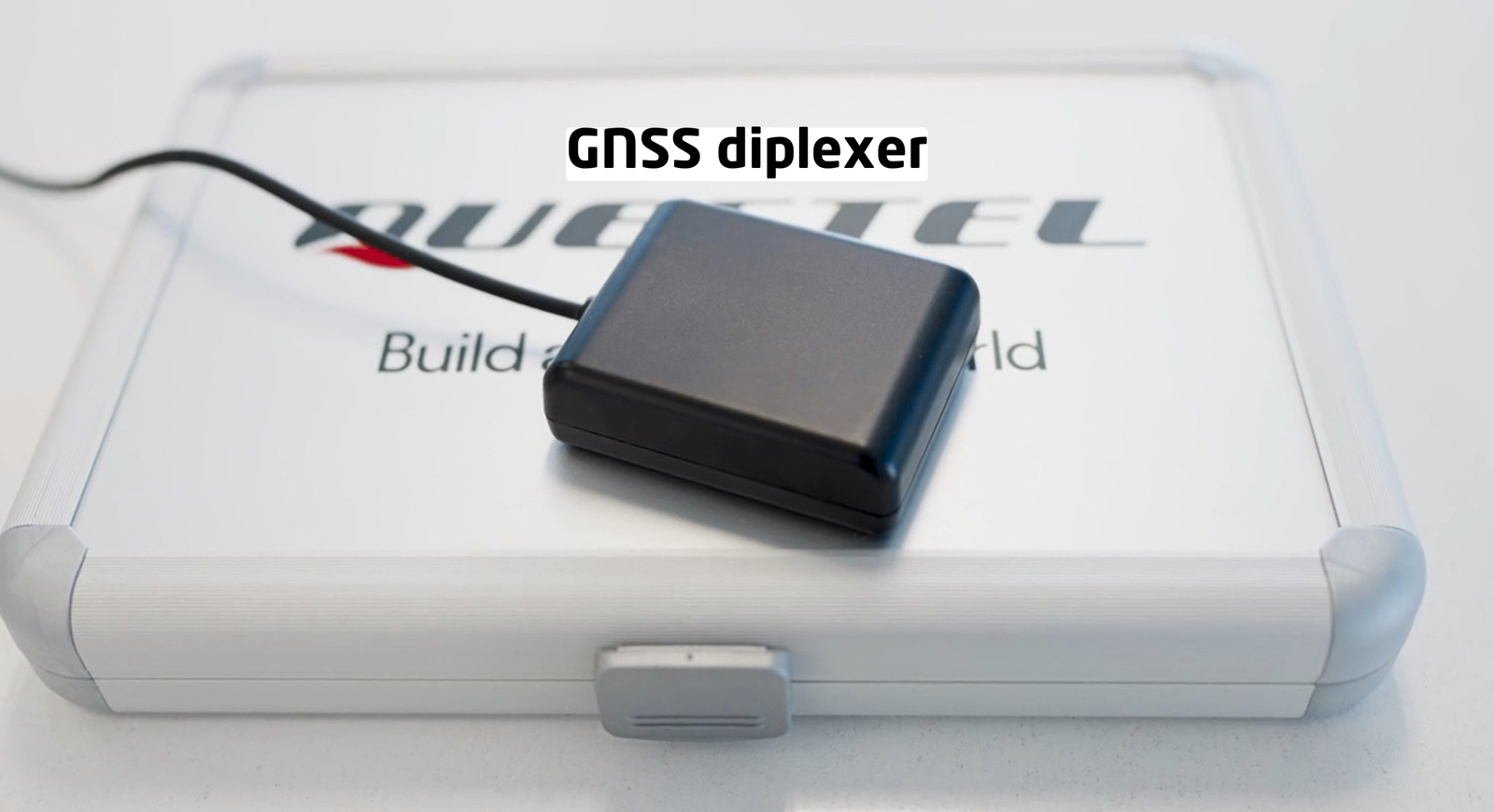
What is a GNSS Diplexer
A GNSS diplexer is a radio frequency device that allows two different frequency signals to share the same antenna system without interfering with each other.
In simple terms, it either combines or separates GNSS signals so that multiple frequency bands can be handled through one antenna path.
Instead of using separate antennas for each GNSS frequency, engineers use a diplexer to simplify the system and make it more efficient. This makes the overall design smaller, cheaper, and more reliable.
GNSS Diplexer – Quick Technical Bio Table
| Feature | Details |
|---|---|
| Name | GNSS Diplexer |
| Type | RF (Radio Frequency) Filtering Device |
| Purpose | Combines or separates GNSS frequency signals |
| Used In | GPS, GNSS receivers, satellites, drones, vehicles |
| Main Function | Allows multiple GNSS bands to share one antenna |
| Frequency Range | Typically L1, L2, L5 bands (1–2 GHz range) |
| Technology | Passive/Active RF filters, SAW, ceramic filters |
| Key Benefit | Reduces antennas, improves signal efficiency |
| Main Advantage | Better accuracy and less signal interference |
| Industries | Automotive, aerospace, marine, surveying |
How GNSS Diplexer Works
The working of a GNSS diplexer is based on filtering different frequency ranges. Inside the device, special filters are used to separate signals based on their frequency.
Low-frequency signals are directed through one path, while high-frequency signals are directed through another. When used in reverse, two signals from different frequency bands are combined into a single output.
A very important part of this process is isolation. Isolation ensures that signals from one frequency band do not mix with another, which helps maintain signal clarity and positioning accuracy.
In advanced systems, materials like SAW (Surface Acoustic Wave) and ceramic filters are used to achieve high precision and stability in signal handling.
Internal Structure and Design
Inside a GNSS diplexer, there are carefully designed filter circuits that control signal flow. These include low-pass filters, high-pass filters, impedance matching circuits, and isolation networks.
Each part is tuned for specific GNSS frequency bands such as 1.57542 GHz for GPS L1 and other nearby bands used by modern satellite systems. Even small design errors can affect signal quality, so precision is very important in manufacturing.
Temperature stability is also considered in design because GNSS systems often operate in extreme outdoor environments such as deserts, oceans, or high-altitude regions.
Types of GNSS Diplexers
There are different types of GNSS diplexers depending on their design and usage.
A passive GNSS diplexer works without external power and is commonly used due to its simple structure and reliability. An active diplexer includes amplification components that boost weak signals, especially in long cable systems.
More advanced designs are multi-band diplexers, which can handle more than two frequency bands at the same time. These are widely used in modern multi-constellation GNSS receivers where multiple satellite systems are processed together.
Applications in Real Systems
GNSS diplexers are widely used across industries where accurate positioning is required.
In the automotive industry, they are used in navigation systems, autonomous driving technology, and vehicle tracking systems. In aviation, they help aircraft maintain accurate flight paths and landing assistance systems.
Maritime navigation also relies on GNSS diplexers for safe route tracking and port operations. Surveying and mapping industries use them in high-precision RTK systems where accuracy is extremely important.
They are also widely used in drones and UAV systems, where compact size and lightweight design are critical factors.
Benefits of GNSS Diplexer
One of the biggest advantages of using a GNSS diplexer is reduced hardware complexity. Instead of multiple antennas for different frequency bands, a single antenna can handle everything.
It also improves signal quality by reducing interference between different GNSS frequencies. This leads to better positioning accuracy and more stable performance.
Another benefit is space saving, which is very important in compact systems like drones, IoT devices, and automotive modules. It also reduces cost because fewer antennas and cables are needed in the system design.
Most importantly, GNSS diplexers support multiple satellite systems at the same time, which is essential for modern navigation technology.
Design Challenges
Designing a GNSS diplexer is not simple because GNSS signals are extremely weak and sensitive. Engineers must ensure very low signal loss and high isolation between channels.
The device must also maintain performance under different environmental conditions such as heat, cold, and vibration. Even small changes in temperature can affect signal behavior if the design is not stable.
Impedance matching is another critical factor. If not properly matched, signal reflections can reduce performance and accuracy.
GNSS Diplexer in Modern Technology
As technology evolves, GNSS systems are becoming more advanced with multiple frequency bands and improved satellite coverage. This increases the demand for compact and high-performance RF components like diplexers.
Modern designs are focusing on smaller chip-based solutions and better integration with antenna systems. Companies in RF engineering and semiconductor industries are continuously improving diplexer technology for better efficiency and lower signal loss.
Conclusion
A GNSS diplexer is a key component in modern satellite navigation systems. It allows multiple GNSS frequency bands to be used through a single antenna system while maintaining signal clarity and reducing interference.
Although it is a small RF device, its impact on navigation accuracy, system design efficiency, and hardware reduction is very significant.
From vehicles and drones to aircraft and mapping systems, GNSS diplexers play an important role in ensuring reliable and accurate positioning in today’s connected world.