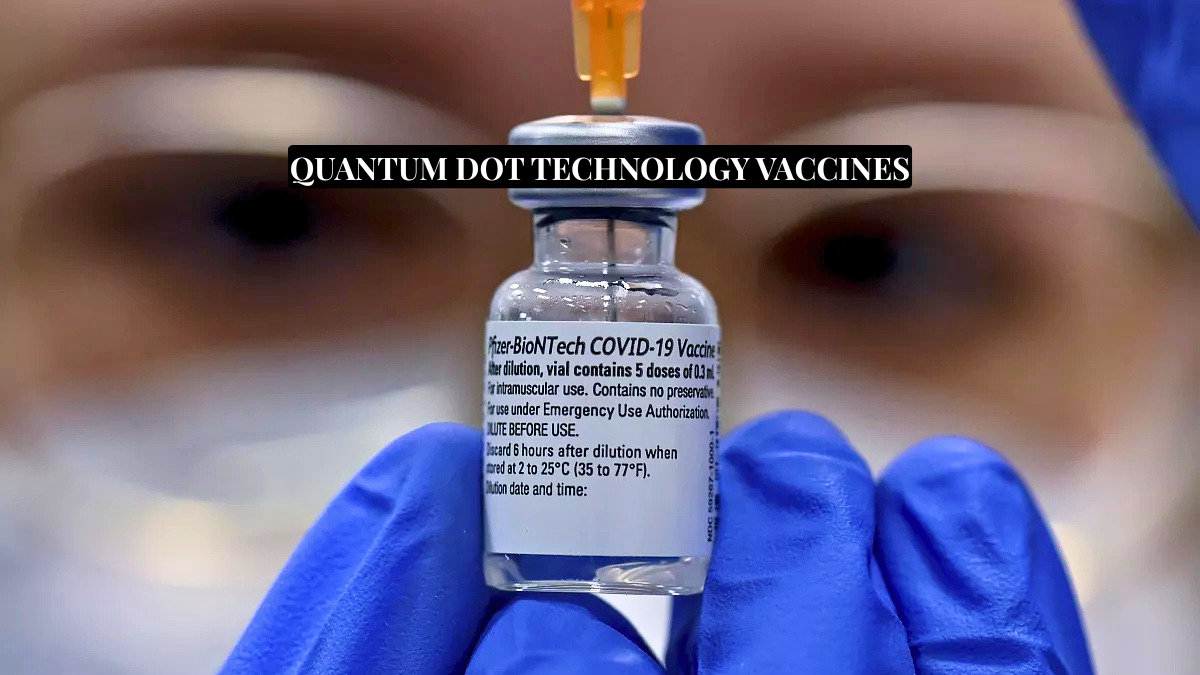
Introduction
Medical science continues to evolve through innovations that improve disease prevention, diagnosis, and treatment. One of the emerging technologies attracting attention in recent years is quantum dot technology. While quantum dots have been used in electronics and imaging applications for decades, researchers are now exploring their potential role in vaccine development, vaccine delivery systems, and vaccination recordkeeping. The concept gained widespread attention after researchers demonstrated how quantum dots could be used to store vaccination information beneath the skin. Although the technology remains largely experimental, it represents an exciting advancement at the intersection of nanotechnology and healthcare.
What Are Quantum Dots?
Quantum dots are extremely small semiconductor nanoparticles that measure only a few nanometers in size. Due to their unique physical and chemical properties, these particles behave differently from larger materials. One of their most remarkable characteristics is their ability to emit specific colors of light when exposed to certain energy sources. Scientists can precisely control these light-emitting properties by changing the size and composition of the quantum dots.
Because of these capabilities, quantum dots have found applications in various fields, including medical imaging, electronics, solar energy, and biological research. Their brightness, stability, and accuracy make them valuable tools for studying complex biological processes and detecting diseases at an early stage.
What Are Quantum Dot Technology Vaccines?
The term “quantum dot technology vaccines” does not refer to a completely new category of vaccines. Instead, it describes the use of quantum dot technology alongside vaccines for specific purposes. Researchers are investigating ways to use quantum dots to improve vaccine delivery, monitor immune responses, and maintain long-term vaccination records.
One of the most widely discussed applications involves incorporating specialized quantum dot markers into dissolvable microneedle patches. These patches can deliver both a vaccine and an invisible marker beneath the skin. The marker can later be detected using specialized imaging devices, providing a potential method for verifying vaccination history without relying solely on paper records or digital databases.
How Quantum Dot Vaccine Technology Works
The technology works by combining advanced nanomaterials with innovative vaccine delivery systems. Researchers create biocompatible quantum dots that emit near-infrared light. These particles are then embedded into microscopic structures designed to remain beneath the skin for extended periods.
When a dissolvable microneedle patch is applied, the tiny needles penetrate the outer layer of the skin and release both the vaccine and the quantum dot markers. After the patch dissolves, the markers remain in place while the vaccine stimulates the body’s immune response. Later, healthcare professionals can use specialized imaging equipment to detect the pattern created by the quantum dots and verify vaccination information.
This approach could prove especially useful in areas where traditional recordkeeping systems are unreliable or inaccessible.
| Topic | Details |
|---|---|
| Technology Name | Quantum Dot Technology Vaccines |
| Category | Nanotechnology & Vaccine Research |
| Purpose | Vaccine delivery, tracking, and recordkeeping research |
| Introduced In Research | 2019 (widely publicized MIT study) |
| Developed By | Researchers in Nanotechnology and Biomedical Engineering |
| Main Components | Quantum dots, microneedle patches, vaccine formulations |
| Key Benefit | Improved vaccination record management |
| Medical Applications | Vaccine tracking, diagnostics, imaging, and research |
| Current Status | Experimental and under ongoing research |
| Safety Status | Requires further testing and regulatory approval |
| Related Fields | Nanotechnology, Immunology, Biomedical Engineering |
| Future Potential | Advanced vaccine systems and healthcare monitoring |
The Importance of Vaccination Records
Maintaining accurate vaccination records is a significant challenge in many parts of the world. Paper documents can be lost, damaged, or destroyed, while digital systems may not always be available in remote regions. Without reliable records, healthcare providers may struggle to determine whether individuals have received necessary vaccines or require additional doses.
Quantum dot technology offers a potential solution to this problem by creating a long-lasting, invisible record directly beneath the skin. Such a system could help improve vaccination coverage, reduce administrative challenges, and support large-scale immunization programs.
Benefits of Quantum Dot Technology Vaccines
One of the primary benefits of quantum dot technology is improved recordkeeping. Healthcare workers could quickly verify vaccination history without relying on external databases or paper documents. This could be particularly valuable in developing countries where medical infrastructure is limited.
Another major advantage is the technology’s potential contribution to scientific research. Quantum dots enable researchers to observe biological processes with remarkable precision. By tracking how vaccines interact with cells and tissues, scientists can gain deeper insights into immune responses and vaccine effectiveness.
Additionally, quantum dots may support future advances in personalized medicine, allowing researchers to develop more targeted treatments and vaccination strategies tailored to individual patients.
Applications Beyond Vaccines
The potential uses of quantum dots extend far beyond vaccine-related technologies. Researchers are investigating their applications in cancer detection, disease diagnosis, molecular imaging, and targeted drug delivery. Their ability to generate strong and stable fluorescent signals makes them highly valuable for medical research and clinical applications.
In cancer research, quantum dots may help doctors identify tumors earlier and more accurately. In diagnostics, they could improve the detection of infectious diseases and other medical conditions. These broader applications demonstrate the versatility and importance of quantum dot technology in modern healthcare.

Safety Considerations
As with any emerging medical technology, safety remains a critical concern. Some quantum dots contain materials that could be toxic if not properly engineered. To address these concerns, researchers have developed protective coatings and biocompatible materials designed to minimize potential risks.
Before quantum dot technologies can be adopted on a large scale, they must undergo extensive testing and regulatory review. Scientists continue studying their long-term effects to ensure they are safe for human use. Regulatory agencies will require strong evidence demonstrating both safety and effectiveness before approving any widespread implementation.
Common Misconceptions
Quantum dot technology has occasionally been misunderstood by the public. Some online claims suggest that quantum dots function as tracking devices or microchips. These claims are not supported by scientific evidence. Quantum dots used in vaccine research are fluorescent nanoparticles that do not contain GPS systems, wireless transmitters, or communication capabilities.
The purpose of the technology is to assist with recordkeeping and medical research rather than surveillance. Understanding the actual science behind quantum dots is important for separating facts from misinformation.
Challenges and Limitations
Despite its promise, quantum dot technology faces several challenges. Manufacturing specialized nanoparticles can be expensive, and large-scale production may require significant investment. Regulatory approval processes can also take many years due to the extensive testing required for new medical technologies.
Public acceptance may present another challenge. New healthcare innovations often raise questions about privacy, safety, and ethics. Researchers and healthcare organizations will need to communicate transparently about the benefits and limitations of quantum dot technology to build public trust.
The Future of Quantum Dot Technology Vaccines
The future of quantum dot technology appears promising. Advances in nanotechnology continue to improve the safety, efficiency, and versatility of quantum dots. Researchers are exploring new ways to integrate these nanoparticles into healthcare systems, diagnostics, and vaccine delivery platforms.
As scientific knowledge expands, quantum dots may contribute to more accurate diagnostics, improved treatment monitoring, and better disease prevention strategies. While widespread adoption may still be years away, ongoing research suggests that quantum dots could become an important component of future medical innovations.
Conclusion
Quantum dot technology vaccines represent an exciting development in the field of nanomedicine. Rather than replacing traditional vaccines, quantum dots are being explored as tools that can improve vaccine delivery, support medical research, and provide innovative solutions for vaccination recordkeeping. Although the technology remains largely experimental, its potential applications highlight the growing role of nanotechnology in modern healthcare.
As researchers continue investigating the safety and effectiveness of quantum dots, this emerging technology may help address important healthcare challenges and contribute to more efficient, accessible, and reliable vaccination programs around the world.
FAQs quantum dot technology vaccines
Q: What are quantum dot technology vaccines?
A: Quantum dot technology vaccines use nanoparticle-based markers to support vaccine delivery, tracking, and recordkeeping research.
Q: Are quantum dot technology vaccines currently used worldwide?
A: No, quantum dot technology vaccines are still largely experimental and are not part of routine vaccination programs.
Q: What is the main benefit of quantum dot technology vaccines?
A: They may help improve vaccination records and support healthcare programs in areas with limited medical infrastructure.
Q: Are quantum dot technology vaccines safe?
A: Researchers are studying their safety, and any future medical use would require extensive testing and regulatory approval.
Q: Do quantum dot technology vaccines contain tracking microchips?
A: No, quantum dot technology vaccines do not contain GPS devices or tracking microchips.